Thursday, July 7, 2011

From News Letter | July |

NEWS LETTER

DIOCESE OF GALLE – SRI LANKA

FOR CIRCULATION AMONG THE CLERGY OF THE DIOCESE
JUNE 2011 – VOL 06. N0.07
OFFICIAL WEB SITE:- www.gallediocese.org
Greetings in the Lord of Hope

My Dear Fathers, Brothers & Sisters,
Let us very humbly thank the Good Lord for the abundant blessings showered upon all of us during the last month and especially for the gift of our New Shepherd in the person of Very Rev. Msgr. Raymond Wickramasinghe who has been nominated as the 07th Bishop of Galle.  His Episcopal Ordination and Installation will be on 31st, August at the Cathedral of Our Lady of the Holy Rosary, Galle.  Let us invoke the Holy Spirit to guide and prepare him  for the new apostolic mission which has been entrusted to him.

On behalf of the organizing committee of the 'Diocesan Vocation Day' I  thank  all the Rev. Fathers, Rev. Brothers, Rev. Sisters and  others who really helped us in numerous ways to have a very fruitful and successful day.  I encourage you to continue guiding and helping the children and youth in your parishes  to discern their vocation  to the priesthood and the religious life.

We are thankful to His Lordship Bishop Cletus Perera OSB for officiating at the diaconate ceremony of Bro. Ravindra Seneviratne on 23rd June 2011 at St. Xavier's Minor Seminary, Kalegana, Galle. We wish our new Deacon a fruitful  ministry in the Diocese.

I am very much pleased to announce that a special Catholic Diocesan Internet Webcast (GD TV) will be inaugurated very soon as a means  to spread the word of God through the Internet (web casting).  The advantage of having such a programme would be that any of our Catholic Programmes  and  events could be webcast into 164 countries at the same time. 

As our Diocese is consecrated to the Sacred Heart of Jesus, let us pay much attention to promote this devotion in the Diocese. Let us de facto consecrate each and every Catholic family of our Diocese to the Sacred Heart of Jesus that sanctifies each and everyone who consecrates oneself to the Sacred Heart of Jesus.   In addition to the devotions we have in our parishes and institutions, may I strongly encourage you to conduct Holy Hours cum Adoration in the presence of  the Blessed Sacrament with your faithful.  We wish all the Heartians of the Sacred Heart Convent School, Galle a very Happy and Holy Feast. 

N.B.:- Our Annual Retreat will be from Monday 11th July to 15th July at the Blessed Sacrament Retreat House, Hanwella.  Our Preacher will be Rev. Fr. Justin Chaukan S.S.S. , the Superior of  St. Phillip Neri's Church, Pettah.

This is a very important spiritual event in our annual programme and of course in our own priestly lives too.  As we begin our Retreat at 10.00 a.m. on Monday 11th July  you are kindly requested to be there on time. May I suggest that you request the religious communities and the faithful of your parishes to pray that we may really benefit from this spiritual exercise. 

The Apostolic Carmelite  Sisters  in Fort, Galle, will celebrate the feast of Our Lady of Mount Carmel  on Saturday 16th July. The thanksgiving Holy Eucharist will be at 5.30 p.m. at the Fort Chapel. We wish them a very happy feast and a fruitful mission in the diocese of Galle.

Sunday the 31st July: Pontifical Mission Society of St. Peter the Apostle.  This is Indigenous Clergy Sunday in all Dioceses.  The Theme for this year is "Send me Lord, to proclaim the Good News"

The Pontifical Society of St. Peter the Apostle, founded in 1843 by Jeanne Bigard, provides for the education of native clergy, support of canonical - year novices, post-graduate study for native diocesan clergy and native religious women.  May we pray for those who are generous to the mission and for those who will receive the benefits of their generosity.  Let us educate our faithful to pray and to be a little more generous in their contributions towards this gracious act and send your collections to the diocesan Director (Rev. Fr. Lalith Fernando).

Our Jesuit Community in Galle celebrates the Feast of St. Ignatius of Loyola on Sunday the 31st.  While appreciating their pioneering missionary work in our Diocese, let us pray for them to be able to continue their  present mission in our diocese  for the Greater Glory of God.  A.M.D.G.

May God Bless you and your ministry.

Yours devotedly in Jesus and Mary,

Fr. Nihal Nanayakkara
Diocesan Administrator

Faith Conducts Reason To Open Itself To The Divine - Says Holy Father

"According to tradition, theology is the science of the faith", said the Pope. "However, if the foundation of theology - i.e., faith - does not at the same time become a focus of thought, if the practice of theology refers only to itself or if it lives exclusively off borrowings from the humanities, then it becomes empty and baseless".
"Theology calls into question the matter of truth; this is its ultimate and essential foundation. Here an expression used by Tertullian may help us to take a step forward: Christ did not say: I am custom, but: I am the truth". The pagan religions, said the Holy Father "were customary by nature. ... They observed the traditional cultural forms, hoping in that way to maintain the right relationship with the mysterious world of the divine. The revolutionary aspect of Christianity in antiquity was precisely its break with 'custom' out of love for truth". The Gospel of St. John "contains the other fundamental interpretation of the Christian faith: the definition of Christ as Logos. If Christ is the Logos, the truth, then man must correspond to Him with his own logos; that is, with his reason".

"From this we can understand that, by its very nature, the Christian faith had to generate theology. It had to ask itself about the rationality of the faith. ... Thus, although the fundamental bond between Logos, truth and faith, has always been clear in Christianity, the concrete form of that bond has produced and continues to produce new questions. ... St. Bonaventure ... spoke of a dual use of reason: a use irreconcilable with the nature of the faith, and another which belongs to the nature of the faith".

For St. Bonaventure there was a "despotism of reason, when it becomes supreme judge of all things. This use of reason is certainly impossible in the context of the faith" because it seeks to submit God "to a process of experimental trial", said the Pope. In our own time, he went on, "empirical reason appears as the only declaredly scientific form of rationality. ... It has led to great achievements, and no-one would seriously wish to deny that it is just and necessary as a way to understand nature and the laws of nature. Nonetheless there is a limit to such a use of reason. God is not an object of human experimentation. He is Subject and shows Himself only in the relationship between one person and another".

"In this context, St. Bonaventure refers to another use of reason: in the 'personal' sphere, in the great questions raised by the fact of being human. Love wants a better knowledge of the beloved. Love, true love, does not make us blind but causes us to see and part of this is thirst for knowledge, thirst for a true knowledge of the other. For this reason the Fathers of the Church found the precursors of Christianity (apart from in the world of the revelation to Israel) not in the area of customary religion, ... but in the 'philosophers', in people who thirsted for truth and who were thus on the path towards God. When this use of reason is lacking, then the great questions of humanity fall outside the field of reason and are abandoned to irrationality. This is why authentic theology is so important. Correct faith conducts reason to open itself to the divine so that, guided by love for truth, it can gain a closer knowledge of God"
***

Really, truly, substantially present - By Father Robert Barron

What is the provenance of this distinctively Catholic conviction that Jesus is “really, truly, and substantially present” under the Eucharistic signs of bread and wine? I would suggest that we begin with the still breathtaking discourse of the Lord, found in the sixth chapter of the Gospel of John. Astounded by the miraculous multiplication of the loaves and fishes, the crowds come to Jesus and he tells them not to search for perishable bread, but rather for the bread that “endures to eternal life.” He then specifies, “I myself am the living bread come down from heaven…the bread that I will give is my flesh for the life of the world.”
Now it would be hard to imagine anything more theologically problematic, and frankly, more disgusting to a first century Jew than this claim. Scattered throughout the Old Testament are numerous prohibitions against the eating of an animal’s flesh with the blood, for blood was seen as life and hence as the special prerogative of God. But Jesus is proposing, not only the eating of an animal’s flesh with blood, but his own human flesh with blood. When they balk (“The Jews quarreled among themselves, saying, ‘How can this man give us his flesh to eat?’”), Jesus does not tone down his rhetoric; he intensifies it: “Amen, amen, I say to you, unless you eat the flesh of the Son of Man and drink his blood, you have no life in you.” It is fascinating to note that the Greek verb that lies behind the word “eat” here is not phagein (the verb normally used to designate the way human beings eat) but rather trogein (a verb that designates the way animals eat, having the overtone of “gnawing” or “munching”). And in case anyone has missed his point, Jesus adds, “For my flesh is real food and my blood is real drink.” Are we surprised that most of the crowd, having taken in this teaching, decided to leave Jesus? “Therefore, many of his disciples…said, ‘This is a hard saying: who can understand it?” So indeed has this teaching been hard and divisive in the course of the church’s life.

How can we begin to understand it? Let us consider the power of words. Certainly words can describe reality, standing, if you will, in a passive relationship to what is. But they can also play a much more active role, not simply describing reality, but affecting it, changing it. Think of the manner in which a word of praise, spoken by a significant authority figure, can change the direction of a young person’s life. Or consider the authoritative statement, “you’re under arrest,” spoken by a properly deputized officer of the law: whether the addressee of those words likes it or not, he is, in fact, under arrest, the words having actively changed his status. Now if our puny human words can change reality, how much more thoroughly and radically can the divine word bring about an ontological transformation. On the Biblical telling, God’s word in fact constitutes reality at the deepest level: “God said, ‘let there by light,’ and there was light.” The prophet Isaiah, channeling the words of the Lord, says, “So shall my word be that goes forth from my mouth; it shall not return to me void, but it shall accomplish what I please…”

Saturday, June 11, 2011

From News Letter | June | Page 01- 02

NEWS LETTER

DIOCESE OF GALLE – SRI LANKA

FOR CIRCULATION AMONG THE CLERGY OF THE DIOCESE
JUNE 2011 – VOL 06. N0.06
OFFICIAL WEB SITE:- www.gallediocese.org

 Very Rev. Fr. Nihal Nanayakkara, Diocesan Administrator with the Presbyterium, Religious and Lay faithful of the Diocese of Galle, wish
Very Rev. Msgr. Raymond Wickramasinghe, the Bishop Elect,
God’s choicest blessings as he undertakes this great responsibility of shepherding the flock
of God in the Diocese of Galle !

My Dear Fathers, Brothers & Sisters,
Greetings in the Risen Lord ! 
Let us very humbly thank the Good Lord for the abundant blessings showered upon all of us and for the intercession of our Blessed Mother during the month of May.
We are pleased to announce that we are blessed almost after two years with a new shepherd in the person of Very Rev. Msgr. Raymond Wickramasinghe who is presently teaching at the National Seminary, Kandy. While thanking the good Lord and the Hierarchy, let us pray for the Bishop elect to be able to have a fruitful  Apostolic Ministry.
The Diocesan Vocation Day will be organized with the participation of all the religious serving in our Diocese on Saturday the 11th commencing at 09.00 a.m. with the Holy Eucharist at St. Mary's Cathedral, Galle.  The detailed information and programme have already been sent to you ; so your fullest cooperation and participation with your parish children is very much expected for the success of  it.
The ORDO mentions this month of June as full of great Feasts; please celebrate them with your faithful in a meaningful manner.  The Solemn Feast of the Holy Spirit is on Sunday the 12th.  The period of fifty days of the sacred season of Easter concludes with Pentecost Sunday, when the Church recalls the gifts of the Holy Spirit to the Apostles, which is the beginning/ birth of the Church, and the start of her mission to all tongues, peoples and nations, namely to continue the very mission of Our Lord Jesus Christ through our humble service. 

 The feast of St. Anthony's Church  at Ganegama will be celebrated on 18th & 19th of this month. 
The Church celebrates the Solemn Feast of CORPUS CHRISTI on Sunday the 26th.  The Cathedral Parish of Galle also will celebrate the same feast on the same day.   The  Priests, religious and lay faithful in the neighboring Parishes are requested to participate in this solemn celebration. 
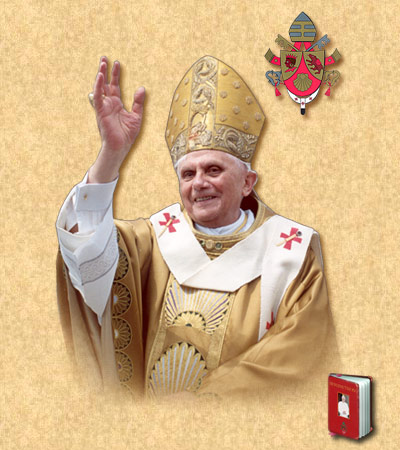
Today is also the Pope's Day and the theme is "Holy Father, let your Voice resound  amidst all strife". Please remind the faithful to prepare this day's celebrations meaningfully. Awaken them to pray for the Holy Father and for his intentions for the Church.  The hoisting of the Papal Flag could be arranged with the singing of the Papal Anthem before the Holy Mass. 
The 60th anniversary of the Priestly Ordination of His Holiness Pope Benedict XVI and 27th anniversary of HisExcellency Most Rev. Dr. Joseph Spiteri the Apostolic Nuncio in Sri Lanka will fall on Friday  29th ;  our prayerful wishes for a continued fruitful  Apostolic ministry in Sri Lanka.

May God Bless you and your ministry.

Yours devotedly in Jesus and Mary,

Fr. Nihal Nanayakkara
Diocesan Administrator

From News Letter | June | Page 06- 07

Very Rev. Msgr.Raymond Wickramasinghe

 By the Grace of God

Seventh Bishop
Of the Diocese of Galle

Name in Full:      Raymond Kingsley WICKRAMASINGHE
Date of Birth:      31th August 1962


Parents
   Father: (Late) Frederick Thomas Goldi Wickramasinghe
   Mother: Margaret Therese Thilakaratne

Secular Studies
Primary:        Grades 1-6 at Pilapitiya Primary school, Kelaniya.
Grade  7-11 at Mayurapadha Maha - Vidyalaya, Mawanella.
Secondary: Advanced Level:  Piyatissa Maha Vidyalaya,Kalegana, Galle.
Priestly Formation
Minor Seminary: St. Francis Xavier's Seminary, Kalegana, Galle -from 1977 – 1981.
Pre-Philosophate: “Daham Sevana” , Kalutara ,from 1982-1983.
Major Seminary: National Seminary, Ampitiya, Kandy, from 1983-1989.
Ordination to the Priesthood  
For the diocese of Galle, by the Most Rev. Dr. W. Don Sylvester, the late Bishop of Galle,
on 05th August 1989
Ecclesiastical Studies
B.TH (Rome), S.T.L. (Rome), S.T.D.  (Specialized in Moral Theology at the Alphonsian Academy,Rome – May 2001 – Magna Cum Laude).
Pastoral Assignments
1. 1st Sept. 1989 – 30th August 1990: Assistant Parish Priest at Ratnapura.
2. 1st Sept. 1990 – 17th April 1991: Rector of the Minor Seminary, Galle.
3. 1st May 1991 – 5th January 1992: Assistant Parish Priest at Balangoda.
4. 10th January 1992-18th October 1992: Secretary to the Bishop of Galle (Bishop W. Don Sylvester) and Assistant Parish Priest of St. Mary's Cathedral, Galle.
5. 19th October 1992 – 15th April 1994: Parish Priest of St. Anthony's Church, Rakwana & the Administrator of the Vianney House, Bulutota.
6. 20th April 1994 – 20th June 1996: Secretary to the Bishop of Galle.
7. 25th June 1996 – 25th June 1998: in  - Collegio San Paolo, Rome, for the Licentiate in Moral Theology at the Alphonsian Academy.
8. 1st November 1998 – 30th June 1999: Secretary to the Bishop of Galle.
9. 1st July 1999 – 25th September 2001: in - Collegio San Paolo, Rome for the Doctorate in Moral Theology at the Alphonsian Academy. Defended the Thesis on 5th May 2001.
10. 28th October 2001 – 15th January 2003: Parish Priest of St. Francis Xavier's Church, Kalegana, Galle.
11. 21st October 2001 – 15th March 2002: Director of Caritas-Sed Galle,the Diocesan Centre for  Social and Economic Development .
12. 12th November 2002  The Diocesan Director for Migrants, Health Care Workers, Tourists and Prisons.
13. 16th January 2003 – 2005: Rector, St. Francis Xavier's Seminary, Kalegana, Galle.
14. 26th January 2006 – 11th May 2008:  Parish Priest, St. Mary's Cathedral, Galle Cum  the Diocesan Director for Family Apostolate.
15. 11th May 2008 – to date:  Formator at the National Seminary, Kandy.
16. 27th May 2011 -  Named as the Bishop  of the Diocese of Galle.
          
Other Responsibilities Held:   From 1994 – 2008
o Served as a Councillor and a Consultor of the Diocese.
o Member of the Diocesan Steering Committee and the Finance       Committee.
o Member of the Papal Visit Committee in 1995.
o Represented Sri Lanka as one of the five member delegation of Young Clergy at a Conference organized by the FABC in Philippines in 1994.
o Served as one of the Secretaries at the Synod of Bishops for Asia, in Rome, in 1998.
o Represented Sri Lanka at the Asian Human Rights Commission held in Hong Kong in 2006.
o Represented Sri Lanka in 2007, for BILA-I on family in Pataya, Thailand organized by the FABC.

 Heavenly Father, you sent Jesus to shepherd your people and the Holy Spirit to make your people one.
 Send your Holy Spirit to anoint our  Bishop-Elect Mgr. Raymond Wickramasinghe so that he may continue the work of renewal in the Church and unite our parishes, priests and people in love, truth and wisdom.
Give him a true shepherd’s heart like that of Jesus, that he may give strength to the weak, heal the broken-hearted, console the lonely, bring back the wandering and be a power against the evil of our day.

Amen.

Thursday, June 2, 2011

From News Letter | June | Page 08


From News Letter | June | Page 09


**************************************************

**************************************************


**************************************************

From News Letter | June | Page 10

The Diocesan Youth Retreat - 2011has successfully been completed

******************************
*************************************************************************************

From News Letter | June | Page 11

Catholic Liturgical Calendar - June 2011


1: Memorial of Justin, martyr.

2: Optional memorial of Marcellinus and Peter, martyrs.

3: Memorial of Charles Lwanga and companions, martyrs.

5: Psalter III, Easter Week 7. (Memorial of Boniface, bishop and martyr.)

6: Optional memorial of Norbert, bishop.

9: Optional memorial of Ephrem, deacon and doctor.

11: Memorial of Barnabas, apostle. Vigil of the Solemnity of Pentecost.

12: Psalter III, Ordinary Time Week 11. Solemnity of Pentecost.

13: Memorial of Anthony of Padua, priest and doctor.

18: Vigil of the Solemnity of The Holy Trinity.

19: Psalter IV, Ordinary Time Week 12. Solemnity of The Holy Trinity. (Optional memorial of Romuald, abbot.)

21: Memorial of Aloysius Gonzaga, religious.

22: Optional memorial of Paulinus, John Fisher, Thomas More,: Vigil of the Solemnity of Corpus Christi.

23: Solemnity of Corpus Christi. Vigil of the Solemnity of Birth of John the Baptist.

24: Solemnity of Birth of John the Baptist.

26: Psalter I, Ordinary Time Week 13.

27: Optional memorial of Cyril of Alexandra, bishop and doctor.

28: Memorial of Irenaeus, bishop and martyr. Vigil of the Solemnity of Peter and Paul, apostles.

29: Solemnity of Peter and Paul, apostles.

30: Optional memorial of First martyrs of the Church in Rome. Vigil of the Solemnity of Sacred Heart.


##################################


"Where the Church is, there is the Spirit of God, and where the Spirit of God is, there is the Church"

The account of the event of Pentecost is rich in details: The place "where they lived" -- the cenacle -- is an environment "in the upper room"; the 11 apostles are listed by name, and the first three are Peter, John and James, the "pillars" of the community, already integrated into this new family, no longer based on family bonds but on faith in Christ.


The total number of persons, which was "about 120," a multiple of the 12 of the apostolic college, clearly alludes to this "new Israel." The group constitutes an authentic "qāhāl," an assembly on the model of the first covenant, the community convoked to hear the voice of the Lord and to walk in his ways. The Book of Acts emphasizes that "all of them devoted themselves with one accord to prayer" (1:14). Prayer, therefore, is the principal activity of the nascent Church. It is through prayer that she receives her unity from the Lord and allows herself to be guided by his will, as the decision to cast lots for the one to take Judas' place shows (cf. Acts 2:25).


This community found itself gathered together again in the same place, the cenacle, on the morning of the Jewish feast of Pentecost, a feast of the covenant, in which there was commemorated the event on Sinai where, through Moses, God proposed that Israel be his property among all the nations, to be a sign of his holiness (cf. Exodus 19). According to the Book of Exodus, that ancient covenant was accompanied by a terrifying sign of power on the part of the Lord: "Mount Sinai," one reads there, "was all wrapped in smoke, for the Lord came down upon it in fire. The smoke rose from it as though from a furnace, and the whole mountain trembled violently" (Exodus 19:18).


We find the elements of wind and fire again at the Pentecost of the New Testament but without the resonances of fear. In particular the fire takes the form of tongues that come to rest upon all the disciples, "who were all full of the Holy Spirit" and on account of that outpouring, "began to speak in other languages" (Acts 2:4). We have here the community's true "baptism" with fire, a kind of new creation. At Pentecost the Church is not constituted by a human will, but by the power of the Spirit of God. And it immediately appears how this Spirit gives life to a community that is at the same time one and universal, thus overcoming the curse of Babel (cf. John 11:7-9). Only the Spirit, in fact, which creates unity in love and in the reciprocal acceptance of diversity, can liberate humanity from the constant tension of an earthly will-to-power that wants to dominate and make everything uniform.


"Societas Spiritus," society of the Spirit: This is what St. Augustine calls the Church in one of his sermons (71, 19, 32: PL 38, 462). But already before him, St. Irenaeus formulated a truth that I would like to recall here: "Where the Church is, there is the Spirit of God, and where the Spirit of God is, there is the Church and every grace, and the Spirit is truth; to distance yourself from the Church is to reject the Spirit" and thus "to exclude yourself from life" (Adv. Haer. III, 24, 1). Beginning with the event of Pentecost, this connubium or "marriage" is manifested between the Spirit of Christ and his mystical body, that is, the Church.


Courtesy:- http://www.pontificalorientalinstitute.com/news/catholic-world/benedict-xvi-pentecost-homily.html

Wednesday, June 1, 2011

From News Letter | June | Page 12

Msgr. Raymond Wickramasinghe meets the Galle Diocesan Presbyterium


Msgr. Raymond Wickramasinghe, the Bishop elect met the Priests of the Diocese of Galle at the Bishop's House on Wednesday 01st June 2011. He was accompanied by Most Rev. Dr. Joseph Spiteri, the Apostolic Nuncio in Sri Lanka. All the Priests working the Diocese gathered at the Bishop's House to welcome the Bishop elect. Very Rev. Fr. Cammilus Cooray conducted a brief prayer service invoking the blessings of the Holy Spirit upon the new Bishop. The Apostolic Delegate shared a reflection based on the Conciliar document 'Christus Dominus', on the importance of the relationship between the local Bishop and his Presbyterium. At the meeting Msgr. Raymond Wickramasinghe expressed his desire to have his Episcopal Ordination at St. Mary's Cathedral Galle on 31st of August 2011.


Fr. Jude Sampath Wilegoda


Download E-Newsletter:- www.gallediocese.org/ http: /gallediocese.org/newsletter/


Rev. Fr. Sampath Wilegoda - Secretary - Bishop’s House - Galle


Tel:- 091 2234256 - 091 5452492 Mobile 077 8115003 Fax 091 4385602


Monday, May 2, 2011

May | Page 01


NEWS LETTER

DIOCESE OF GALLE – SRI LANKA

FOR CIRCULATION AMONG THE CLERGY OF THE DIOCESE
MAY 2011 – VOL 06. N0.05
OFFICIAL WEB SITE:- www.gallediocese.org
Fr.  Administrator writes……
My Dear Fathers, Brothers & Sisters,
Greetings in the Risen Lord ! Alleluia !
Having celebrated the Easter Triduum let us thank the Heavenly Father for sending His Only Son Jesus Christ for the Redemption of the mankind.  Let us continue our ministry with the graces received at Easter, throughout this Liturgical Year.  May I wish all of you a very Happy and Holy Easter! Alleluia !
We respectfully express our sincere thanks & gratitude to His Excellency Most Rev. Dr. Joseph Spiteri the Apostolic Nuncio in Sri Lanka for presiding over the Palm Sunday celebration in Hiniduma and to His Lordship Most Rev. Dr. Harold Anthony Perera, the Bishop of Kurunegala for  celebrating the Chrism Mass in Galle.
Let me thank you dear Fathers for all the services rendered during this period of grace with the cooperation of the religious and the lay faithful for the spiritual renewal and upliftment of all your people.  May the Risen Lord continue to bless all of you and your ministry.
May I thank and appreciate the committed services rendered by Rev. Fr. Shelton Fernando the Administrator catering to the spiritual and all other needs of the pilgrims of the Hiniduma Calvary Shrine, with the help of other Priests, religious and lay faithful  from Ash Wednesday to Easter Sunday.
Our deepest sympathies to Rev. Fr. Bernard Wijerathna and his family members over the death of their father late Mr. Anthony Wijerathna. May he rest in peace!
Being the Feast of St. Joseph the Worker on 01st May, it is our prime duty and responsibility to convince and educate our faithful to respect and maintain the dignity of labour.
The month of May is dedicated to our Blessed Mother.  You are kindly requested to celebrate May Novenas together with Holy Mass and honour our Blessed Mother being faithful to these devotions and celebrate the Feast of the Visitation of the B.V. Mary on Tuesday the 31st. May Our Blessed Mother intercede for all of you.
Our Monthly Recollection will be on 02nd & 03rd May; so please be on time to start our Presbyteral Meeting on Monday the 02nd at 03.30 p.m.
Our prayerful wishes for a fruitful pastoral ministry to the new Anglican Bishop – elect of Colombo Ven. Dhiloraj Ranjit Canagasabey whose Episcopal Ordination and Installation will be on 14th May.
As the World Day of Prayer for Vocation falls on 15th May; please pray for fostering vocations both for the Priesthood and Religious Life in your parishes and religious communities.
Let us show our solidarity and brotherhood with our Buddhist brethren during the Vesak season  as they celebrate 2600th Buddhist Jayanthi year.
The Second Anniversary of the Episcopal Consecration of His Excellency Most Rev. Dr. Joseph Spiteri, the Apostolic Nuncio in Sri Lanka falls on 24th of May. We wish His Excellency a very happy Anniversary and God’s choicest blessings for a fruitful ministry in Sri Lanka.
Our Annual Diocesan Youth Retreat will be from 16th to 18th May at D.D.N. Halpatota.  As it is an important event in their lives; please encourage your youth to participate in it.  Fr. Director will do the needful.
Let us continue to pray for us to have a Spiritual Leader soon.
May God Bless you and your ministry.
Yours devotedly in Jesus  and  Mary,
Fr. Nihal Nanayakkara
Diocesan Administrator

May | Page 02


What is the Resurrection?

         Benedict XVI explains it so well in “Jesus of Nazareth”
In our highly technological world, the reality of the Resurrection becomes increasingly difficult to fathom. So many spend their lives explaining it away rather than probing the depths of its mystery. And they try to do this alone, separated from a believing community of Christians, locked in the prison of self and of ideas, frozen before a computer screen as they try to fathom what happened on Easter morning.
Some people state quite frankly that the whole story is simply out of date. But the Resurrection is not a matter of the head, of theory and ideas, but a matter of the heart that can only be experienced and learned through a community’s worship and liturgy. To be fully experienced and grasped, the Resurrection requires an environment of hauntingly beautiful music, of smoke and incense, bread and wine, murmurs of greeting and shouts of joy, dazzling colors and most of all, three-dimensional bodies of real people, even those who aren’t necessarily “regulars” of our parish communities, who gather together every year to hear the Easter proclamation.
One doesn’t sit at a computer and tap out “Jesus is risen.” It has to be performed and enacted. If the Resurrection were meant to be a historically verifiable occurrence, God wouldn’t have performed it in the dark without eyewitnesses. The Resurrection was an event transacted between God the Father and God the Son by the power of God the Holy Spirit.
Not a single Gospel tells us how it happened. We don’t know what he looked like when he was no longer dead, whether he burst the tomb in glory or came out like Lazarus, slowly unwrapping his shroud and squinting with wonder against the dawn of Easter morning in a garden in Jerusalem.
Jesus’ victory over death belongs to the Church’s ongoing pastoral and sacramental life and its mission to the world. The Church is the community of those who have the competence to recognize Jesus as the Risen Lord. It specializes in discerning the Risen One. As long as we remain in dialogue with Jesus, our darkness will give way to dawn, and we will become “competent” for witness. In an age that places so much weight on competency, we would do well to focus every now and then on our competence to discern the Resurrection.
What is the Resurrection? Benedict XVI explains it so well in “Jesus of Nazareth”: “It is part of the mystery of God that he acts so gently, that he only gradually builds up his history within the great history of mankind; that he becomes man and so can be overlooked by his contemporaries and by the decisive forces within history; that he suffers and dies and that, having risen again, he chooses to come to mankind only through the faith of the disciples to whom he reveals himself; that he continues to knock gently at the doors of our hearts and slowly opens our eyes if we open our doors to him.
“And yet — is not this the truly divine way? Not to overwhelm with external power, but to give freedom, to offer and elicit love. And if we really think about it, is it not what seems so small that is truly great?” (p. 276).